Wednesday, November 10, 2010

The Most Remote Places

Sitting in the pub The Laurel one evening I overheard a visitor telling his companion about how remote some of our moors were from roads. Checking my map the following morning identified the centre of Baysdale moor, SW of Westerdale, as being 2.5 miles from the nearest road and you might just get 3 miles if you went further SW toWhorlton moor on the Cleveland hills.

Of course, if you went to Scotland you just might find yourself with a longer walk. A couple of places in the highlands are about 14 miles from public roads.

To find extremely remote places on earth we must travel much further.

The most remote uninhabited island in the world is Bouvet island in the South Atlantic. It is 1400 miles from Tristan Da Cunha and 1000 miles from Queen Maud land in Antarctica.

The most remote inhabited island is Tristan Da Cunha in the South Atlantic with a population of a couple of hundred people. It is 1400 miles from Antarctica, 1600 miles from South Africa and over 2000 miles from South America. There is no airport, access is by sea from Cape Town a few times a year. There is no harbour to speak of. A few ships stop by, weather permitting, for the boats to ferry people to and from the island. I visited it on a dull, cold, wet & stormy day 40 years ago. It is a truly remote and desolate spot, several days sailing across a bleak and empty ocean.

On land the most remote places are difficult to identify. Some places in China, Russia, Mongolia & Tibet are remote, but these have been populated for a long time so settlements, villages, towns and cities occur along with roads and travel links.

It is Canada that has just about the most remote inhabited & uninhabited places on earth. To give you and idea of scale, Canada is 3/5ths the size of Russia and larger than Australia. It is bigger than both USA, China, Mongolia & Tibet and a little larger than Europe, but without the roads or the people. Some of its lakes and bays are bigger than the North Sea.

There cannot be many places in Europe where you’d be more than a few miles from the nearest human. But Alert, in Nunavut inside the Canadian arctic ocean is a small weather and radio station 500 miles from the north pole. The nearest town is Iqaluit, 1300 miles south and 2600 miles from the City of Quebec. There’s no public travel service but it is visited regularly by military transport. It’s a long way to do the Christmas shopping.

In the far north of Canada lie The Barren Lands, an area of half a million square miles of rolling tundra (almost the same size as Europe) with a population of just a few thousand in remote settlements. It is the most sparsely populated area of land outside of Antarctica. It forms the largest single wilderness remaining in North America and one of only a few fully intact wild ecosystems on our planet. It is a place of stunning beauty. There are no roads, railways or airports. Hundreds of rivers and countless hundreds of thousands of lakes are un-named. The nearest accessible settlement to the Barren Lands is Fort Smith, about 300 miles away, a small town of 2000 Cree Indians and Europeans. To get to Forth Smith involves a 12 hour drive from Edmonton in the south over a rough road in summer only, or a 3 hour flight from Edmonton. The only planes that can land in the Barren Lands are floatplanes. Due to the distances, this sometimes means another float plane has to travel with you to take extra fuel for your return flight. If you fly to the Barrens it'll be the most expensive plane trip you'll ever make!! You fly for hours over endless boreal forest, tundra, lakes, sand hills and twisting rivers stretching from horizon to horizon. Bears, wolves, musk oxen and many thousands of caribou inhabit the land. It is the summer breeding grounds of many millions of geese, ducks and wading birds. Mobile phones, Sat Navs & normal radios don’t work here.

Flowing for hundreds of miles across the Barrens is the Thelon River. No one lives here. A few have tried it and failed, notably the Hornby party. In 1927 three Englishmen, (John Hornby, his cousin and a friend) thought they could survive out there. They came, built a cabin at an isolated group of spruce now called Hornby Point and starved to death in their first winter, their story recorded in a journal one of them kept throughout the ordeal. Their graves and remains of their cabin lay beside the river, a reminder that this is a land of extremes where the winter temperatures drop well below –40oC It is extremely remote and hauntingly beautiful. It would be impossible to get here on foot in the brief summer due to the thousands of lakes & rivers. The skilled can make the long journey over many days by dog team, over the snow & ice after the freeze up in winter or by canoe in summer. The nearest settlement is a further 250 miles down river by canoe. There are no roads, railways or man made objects between you and the north pole, nor between here and Russia, over 1500 miles away to the west. It is 700 miles to the south before the nearest railway or road. Rescue by plane is not an option for there is nowhere suitable to land.

Trish and myself made the long journey to the Barrens in 2007, we spent 11 days canoeing and camping along the Thelon river and visited the cabin at Hornby Point. More people have climbed Everest than canoed here and Trish is probably the only Englishwoman ever to have seen this place.

Remoteness and isolation are relative. The visitor in the pub came from London!

Friday, October 1, 2010

Rats in the Well!!

A friend and I were walking past one of the more remote farms along the moorland fringe which still had its own spring fed water supply. My friend waxed lyrical about the the wonderful quality of spring water. I had to point out that having your own private water supply was not always without problems and I told him about the move into our house in Co. Cork several years ago, which had its own water supply fed from a deep well.

We’d not been in the house long before I discovered the well. Scything away at the long grass a few yards from the back door I uncovered two black plastic pipes disappearing vertically down an 8” steel pipe. Several lumps of grass disappeared downwards too and I wondered what else could fall down an 8” pipe and probably had done in the several years the house had been empty. I carefully cleared several large snails and slugs from inside the pipe they too followed the grass to the bottom..

The water supply was rather brown but this had slowly been clearing, as I’d been told it would do with increased use. I’d drunk a lot of dirty looking, but perfectly safe, drinking water over the years so I forgot about it. Until, that is I noticed a small crack in the steel vessel which regulates the water pressure and was situated in the ruins of one of our outhouses. Inside the crack I could see a rubber bladder repeatedly inflating and deflating as water was pumped into the house. I wondered how soon the crack would open more and the bladder within burst. I decided to call the only likely name in the local paper and hoped my English accent along with my vague description of the problem would not put him off answering the message I left on his answer phone.

The next day dawned bright and sunny. At lunch I enjoyed a leisurely snack only interrupted by a fountain of water suddenly erupting from the outhouse containing the offending pressure vessel. I ran outside and fumbled in the wet for the ‘off’ switch and was rewarded, quite properly, by one of several electric shocks before succeeding in turning the electric off and the fountain subsided.

Soaking wet I headed back towards the house to be greeted by a cheery “Dave Perry?” from a man who introduced himself as; “Peter Downy, water and well engineer”,,,. “What’s the problem” he asked and I showed him how I got wet.

Ten minutes later, a new pressure vessel installed , my thoughts returned to the quality of water. I asked him if he could test the water.

“What for?” he asked, and I told him about the brown water and how I was worried about bacteria and germs in the water.

“How long have ye lived here?” he asked. And I told him several weeks.

“And have ye been well all that time so?” and I informed him that that was the case, nor had any visitor enjoying the water been ill.

“Then there’s nothing wrong with your water is there – what’s the point of sending it away to be tested then?

“But what if a rat, mouse or something else had fallen down the well and was floating in the cold water 100’ below the ground?”.

He came into the kitchen and asked for a clean glass of water which he held up to the light examined it with care and tasted it, announcing it; “Grand water altogether!”.

“Yes but what if there was a rat or mouse down there, how would you know?

“He looked at the water in the glass again and sniffed it. “I’d have smelt it” he announced. “Yes”, I replied, “but the water down there is cold and any rat or mice might not be rotting”. He took another sip and told me the well was fine as he would have tasted any such rat or mouse.

He then told me that the first sign of dead furry things in the well such as mice or rats would be bits of fur and hair pulled off by the pump and it would now be present as little grey bits of fluff in the glass. Our water was perfectly clear!!

He then told me how you would deal with dead animals down wells, by putting sterilising solutions into the well, flushing all the taps, leaving it to sterilise and so on. All information I might someday need, and I absorbed every detail.

So visitors came and went and I told the story to all our English visitors who were used to carefully manufactured water, which in the case of some of my towny friends had been recycled numerous times by their own neighbours.

A couple of years later I found myself in the position of care-taking several neighbouring houses owned by second home, owners from places as far away as America. And so it came about that one such American who owned a grand holiday house a few miles away phoned me up one day after arriving from the states.

“Hi Dave, can you pop over here bud and look at our water there’s a problem?”.

.”What’s the problem?” I enquired.

“There’s bits of grey stuff in the water”.

Thursday, September 16, 2010

A little stuck perhaps?


Every year two or three cars get stuck on this sharp junction up at the entrance to Fyling Hall school, at Fylingthorpe.near Whitby. This car had to be lifted out by crane as it could neither reverse or go forward.


And another one June 2017

Wednesday, August 18, 2010

Getting Lost in Wintergill Plantation?


Our local paper, the Whitby Gazette reported this Tuesday 17th August that a family of 3 adults and 8 children had to call out the mountain rescue as they were 'lost' inside Wintergill plantation. Lost? You can see from the map that at most the plantation is less than 1km wide and in a valley. You couldn't hide 11 people in that plantation!! The family were staying in Glaisdale and had walked to the woods. Obviously having walked either up to it or down to it from the road they obviously couldn't work out which way was back. Surely even simply knowing that it is in a valley you could walk downhill and end up in the open valley below or uphill and you end up on the road.
Read the full story here

Monday, August 16, 2010

Canoeing the Rivers Rye & Derwent (North Yorkshire)

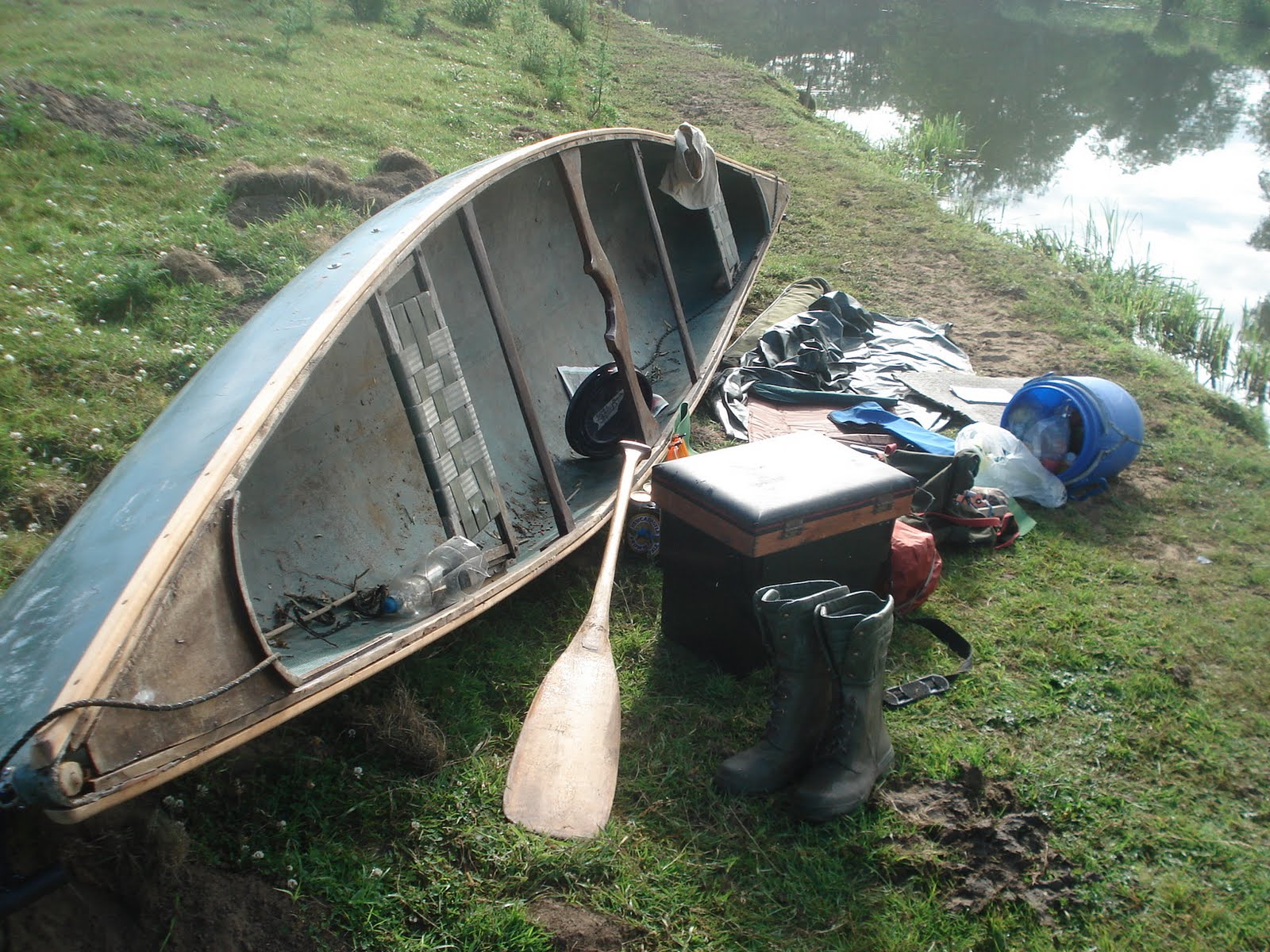
Dropped off at Newham Bridge a few miles NW of Malton on the R.Rye. The river is narrow and I soon encountered the first of a handful of log jambs which had to be negotiated. This section of the Rye contains several simple rapids. But the biggest challenge was avoiding the many sheep drowned in the winter due to flooding. There's no way around this. Through Malton. Not pleasant but no one noticed!! An hours paddling took me to Jeffry Bog a couple of meadows managed by Yorkshire Wildlife trust and absolutely packed with many species of grasses, flowers and awash with common blue butterflies. I decide to camp just downstream. No tent, just the canoe, a karrimat and my fishing gear. Its a warm evening and as darkness approaches I notice a ripple advancing towards me from close to my side of the bank. I knew this was no bird and keeping as still as possible a pair of otters came and swam in front of me, one of which approached to within several feet to see what I was. I woke early the next morning to be greeted by this young bullock.. My arms were still sore after some neck and shoulder injury so I decided I wouldn't paddle much further that day. Another night was spent further upstream and I discovered a family of otters playing in a tiny feeder stream. One of the many moorhens nests along the banks side. (To be continued)

Monday, April 19, 2010

Ian Bailey (3)

Our neighbour in Ireland was Ian Bailey and is the most arrogant, pompous and vindictive man I ever met. He spent years trying to prevent me walk over the fields near our respective houses, despite knowing that the owner is my very good friend. He even got his Cork, big boy Lawyer, Frank Buttimer to send me threatening letters. (which all went directly into the waste bin). He threatened me a few times, and kept a collection of photographs of me as I crossed the fields. Often he ran to his boundary to shout at me although I never really heard what he was saying, This woman beater - he beat his partner Jules Tomas ("I'm an artist you know") up a few times, and once enough for her to be admitted to hospital such were the state of her injuries.

Of course Bailey loves publicity and made sure he hit the news whenever he could often biting off more than he could chew as when his liable case against several newspapers failed. A coward at heart despite his arrogance, he spent most of the time hiding at home. Now it just looks as though this unemployed ex gardener and fish filliter might just have more on his plate. The French authorities now want to extradite him for the murder of Frenchwoman Sophie du Plantair. Read more

If you wish to read more about his alleged role in the murder click here

Canoeing the Tees - Neasham to Dinsdale


Managed to get out paddling on the River Tees with a group from the Song of The Paddle forum. Jilly came too!

You can read & see more pictures by clicking right here